Tech Blog Posts

Vibe Code Your FileMaker Apps

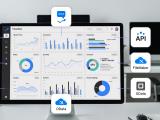
Democratizing FileMaker Development—Build Sophisticated Interfaces with Just a Description. Powered by FileMaker MCP Server + OData.
AI generated artwork

The Real Superpower of AI

Imagine handing your entire FileMaker knowledge base to an AI agent. The FileMaker Data API MCP Server gives AI agents complete introspection of your FileMaker solution, enabling architect-level coding capabilities.
FileMaker to ELK Stack Integration

Real-Time FileMaker Data Monitoring

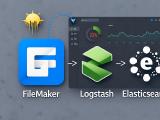
Transform your FileMaker data into actionable intelligence with real-time monitoring and visualization. Learn how to automatically feed FileMaker data into the Logstash/Elasticsearch/Kibana (ELK) stack using FileMaker's JDBC interface. This comprehensive guide walks you through setting up seamless data ingestion, creating powerful dashboards, and gaining instant visibility into your critical business metrics—all without custom development complexity.

Building Scalable AI Pipelines with Open Source Tools

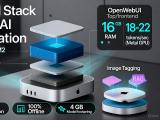
Learn how to architect production-grade AI pipelines using open-source tools. This guide covers containerization, orchestration, monitoring, and scaling strategies for deploying language models and AI agents in real-world environments.
OpenWebUI vs LM Studio comparison guide

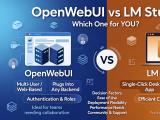
OpenWebUI vs LM Studio – Which Local LLM Frontend Is Right for You?

Choosing between OpenWebUI and LM Studio? This comprehensive comparison breaks down the key differences in architecture, ease of use, performance, and ideal use cases. Whether you're a solo developer wanting a one-click desktop experience or a team managing multi-user inference servers, find out which tool aligns with your workflow—plus how each one compares to alternatives like Ollama, vLLM, and Text Generation Inference.

RAG Systems: Bridging Knowledge Bases and Language Models

Explore how Retrieval-Augmented Generation (RAG) systems combine the power of language models with external knowledge bases. Learn about vector databases, embedding strategies, and best practices for building accurate, context-aware AI applications.

Fine-Tuning Open Source Models for Your Domain

Learn how to adapt open-source language models to your specific domain. This guide covers data preparation, training strategies, evaluation metrics, and deployment considerations for creating specialized models that outperform generic alternatives.

Multimodal AI: Combining Vision and Language Models

Discover how multimodal models that combine vision and language capabilities are transforming AI applications. Learn about popular models like LLaVA and GPT-4V, their use cases, and how to build applications that understand both images and text.